
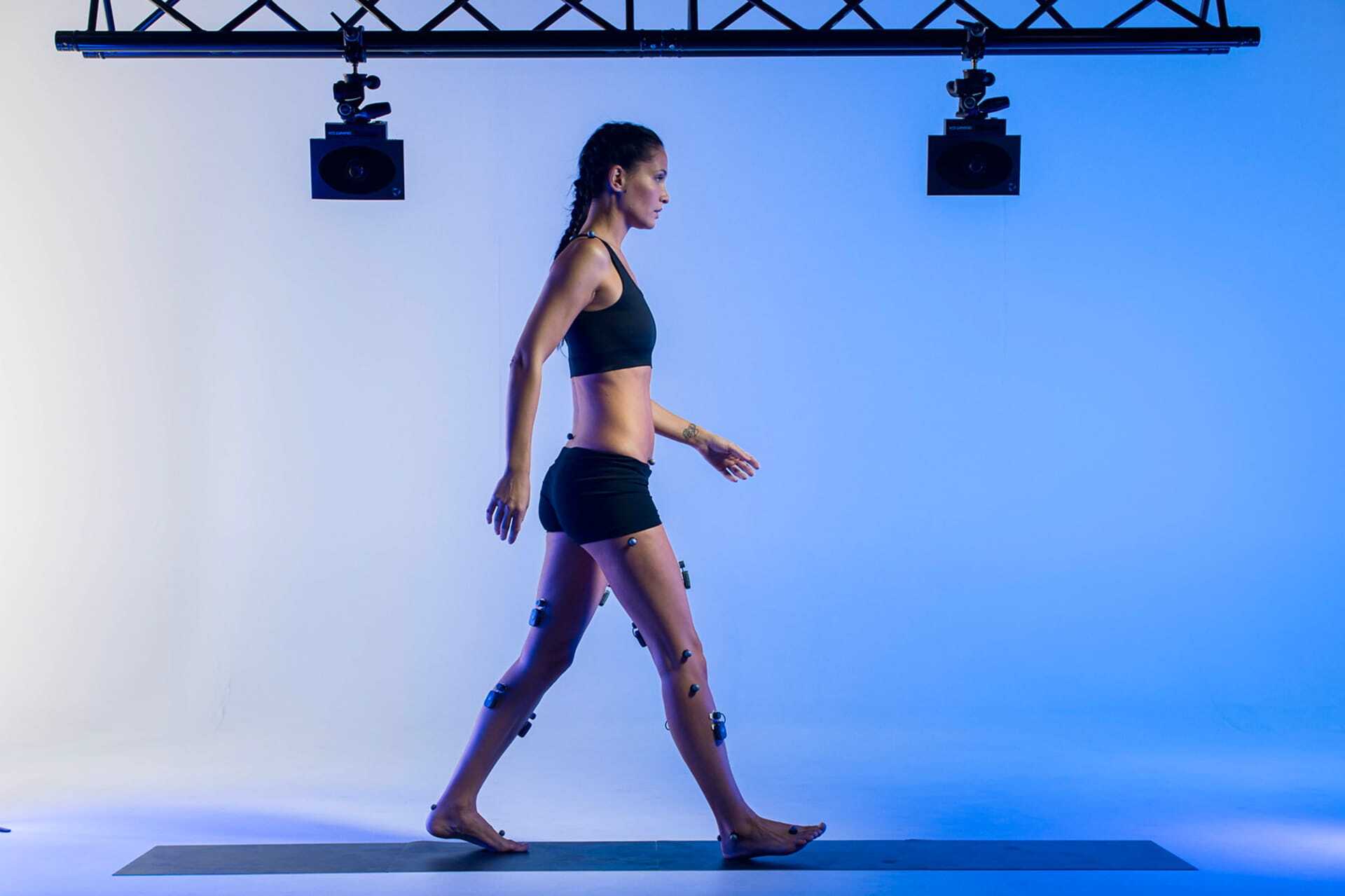
Gait Analysis

Gait analysis reveals key insights into movement patterns and abnormalities. It helps guide targeted treatments like physical therapy, orthotics, and corrective exercises to improve mobility.

What is Gait Analysis?

Gait analysis is a method used to assess and analyze the way a person walks or runs. It involves the systematic observation, measurement, and interpretation of an individual’s gait pattern, including the movement of various body parts and the overall biomechanics of walking or running. Gait analysis can be performed for various purposes, including evaluating normal walking patterns, identifying abnormalities or deviations, and guiding treatment or interventions for individuals with gait-related issues.
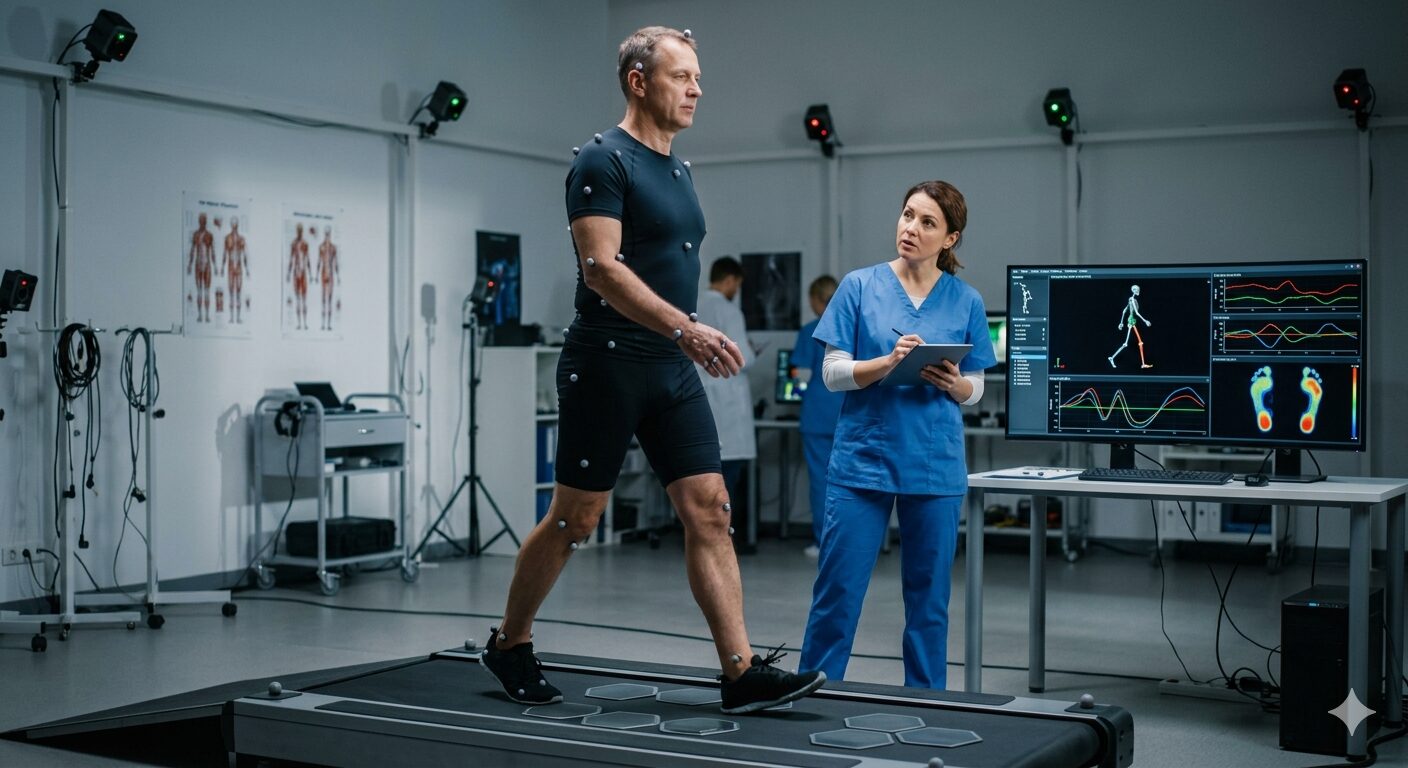
Here are Key Components of Gait Analysis:

Visual Observation:
  • Gait analysis often begins with a visual assessment of how a person walks or runs. Observers look for abnormalities in posture, stride length, step width, arm swing, and overall coordination.
Temporal and Spatial Parameters:
  • Stride Length: The distance covered in one full gait cycle (from the heel strike of one foot to the next heel strike of the same foot).
  • Step Length: The distance between the heel strike of one foot and the heel strike of the opposite foot.
  • Cadence: The number of steps per unit of time (usually measured in steps per minute).
Kinematics:
  • Kinematics refers to the study of movement without considering the forces involved. In gait analysis, kinematic measurements involve tracking joint angles and movements during walking or running. This is often done using motion capture systems and specialized cameras.
Kinetics:
  • Kinetics focuses on the forces involved in movement. In gait analysis, kinetic measurements may include forces exerted on the ground, joint moments, and the distribution of forces throughout the foot.
Foot Position:
  • Pronation and Supination: Pronation: The natural inward rolling motion of the foot during the gait cycle. Excessive pronation can contribute to issues like flat feet and may result in an imbalanced distribution of forces. Supination: The outward rolling motion of the foot during the gait cycle. Excessive supination can reduce shock absorption and increase stress on the ankle and knee joints.
  • Arch Height: Flat Feet (Pes Planus): Individuals with low or collapsed arches may exhibit overpronation during gait, impacting shock absorption and increasing the risk of certain conditions such as plantar fasciitis or shin splints. High Arches (Pes Cavus): Individuals with high arches may have a more rigid foot structure, potentially leading to increased impact forces and a reduced ability to absorb shock.
  • Toe Position: Toe-out or Toe-in Gait: The angle of the toes during walking can affect the overall alignment of the lower extremities. Excessive toe-out or toe-in may contribute to issues with knee and hip alignment.
Knee Position:
  • Valgus and Varus Alignment: Valgus: The knee angles inward, often observed as knock-knees. Excessive valgus alignment may contribute to issues like patellofemoral pain syndrome and increased stress on the medial compartment of the knee. Varus: The knee angles outward, often observed as bowlegs. Excessive varus alignment may contribute to issues like medial compartment osteoarthritis and increased stress on the lateral compartment of the knee.
  • Hyperextension or Flexion: Hyperextension: Excessive backward bending of the knee during the stance phase can lead to increased loading on the knee joint. Flexion: Inadequate bending of the knee during the gait cycle can result in reduced shock absorption and may contribute to issues such as increased impact on the spine.
  • Dynamic Alignment: Frontal Plane Dynamics: Abnormal lateral movement of the knee during gait can contribute to issues such as iliotibial band syndrome and lateral knee pain. Sagittal Plane Dynamics: Abnormal forward or backward movement of the knee can impact the efficiency of gait and contribute to issues such as anterior knee pain.
Antalgic Gait:
  • Description: A lateral trunk lean toward the stance leg during walking, typically indicating weakness of the hip abductor muscles.
  • Identification: Observable side-to-side sway or tilt of the pelvis during walking.
Foot Drop:
  • Description: Difficulty lifting the front part of the foot, often resulting in a slapping sound during the swing phase.
  • Identification: Insufficient dorsiflexion of the ankle during the swing phase.
Equinus Gait:
  • Description: Limited ankle dorsiflexion, leading to a decreased ability to lift the heel off the ground during the swing phase.
  • Identification: Reduced range of motion at the ankle joint.
Ataxic Gait:
  • Description: Uncoordinated and unsteady gait, often associated with neurological disorders affecting balance and coordination.
  • Identification: Irregular and unpredictable steps, often with a wide base of support.
Spastic Gait:
  • Description: Increased muscle tone and stiffness, leading to a stiff and jerky gait pattern.
  • Identification: Reduced flexibility in the joints and resistance to movement during walking.
Scissoring Gait:
  • Description: Legs cross over each other with each step, often seen in conditions affecting the muscles and coordination.
  • Identification: Legs appear to cross midline during the swing phase.
Short Leg Gait:
  • Description: Unequal leg lengths leading to compensatory movements during walking.
  • Identification: Uneven step lengths, often with pelvic tilt or leaning to one side.
Pronation or Supination:
  • Description: Excessive inward (pronation) or outward (supination) rolling of the foot during the gait cycle.
  • Identification: Visual assessment of the arch and alignment of the foot during weight-bearing.
Toe Walking:
  • Description: Walking on the toes without the heel making contact with the ground.
  • Identification: Lack of heel strike during the initial contact phase.
Steppage Gait:
  • Description: Exaggerated lifting of the hip and knee during the swing phase to clear the foot, often seen in foot drop.
  • Identification: Higher than normal knee and hip flexion during swing phase.

Ready to prioritize your physical health?

755 Queensway East

Mississauga ON L4Y 4C5

REHABILITATION SERVICES

Unit 303: Physiotherapy, Massage Therapy,
Chiropractic, Custom Bracing, DEXA Body Scans

Mon, Wed, Fri : 8 am to 7 pm
Tues, Thurs : 8 am to 5 pm
Sat to Sun : Closed

MEDICAL SERVICES

Unit 303: Rheumatology, Neurology, Psychiatry, Lifestyle Medicine
Unit 304: Physical Medicine, NCS/EMG, US-Guided Injections

Mon to Fri : 8 am to 5 pm
Sat to Sun : Closed
(Hours and availability may vary)

Book Therapy